Practical Life
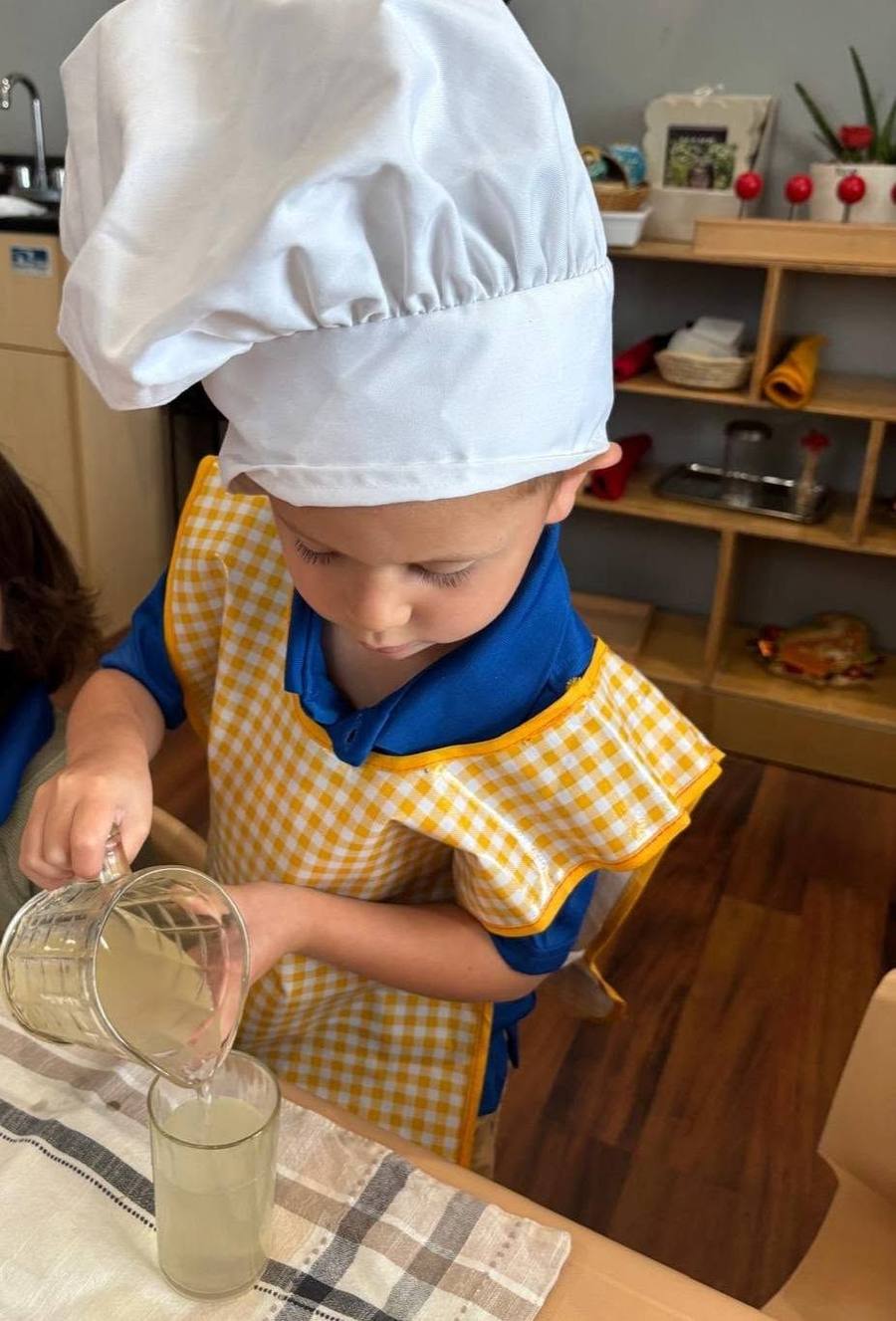
Pouring, preparing snack, dressing, and caring for the classroom. Real tasks build coordination, concentration, and independence.
Our approach
Montessori is a complete approach to education, developed by Dr. Maria Montessori more than a century ago and practiced in schools around the world. It begins with deep respect for the child.
“Help me to do it myself.”
Children choose their work from the lessons they have been given and repeat it as often as they need. Choice builds concentration, motivation, and independence.
Child-sized furniture, open shelves, and beautiful, orderly materials. Everything has a place, so children can find it, use it, and put it back on their own.
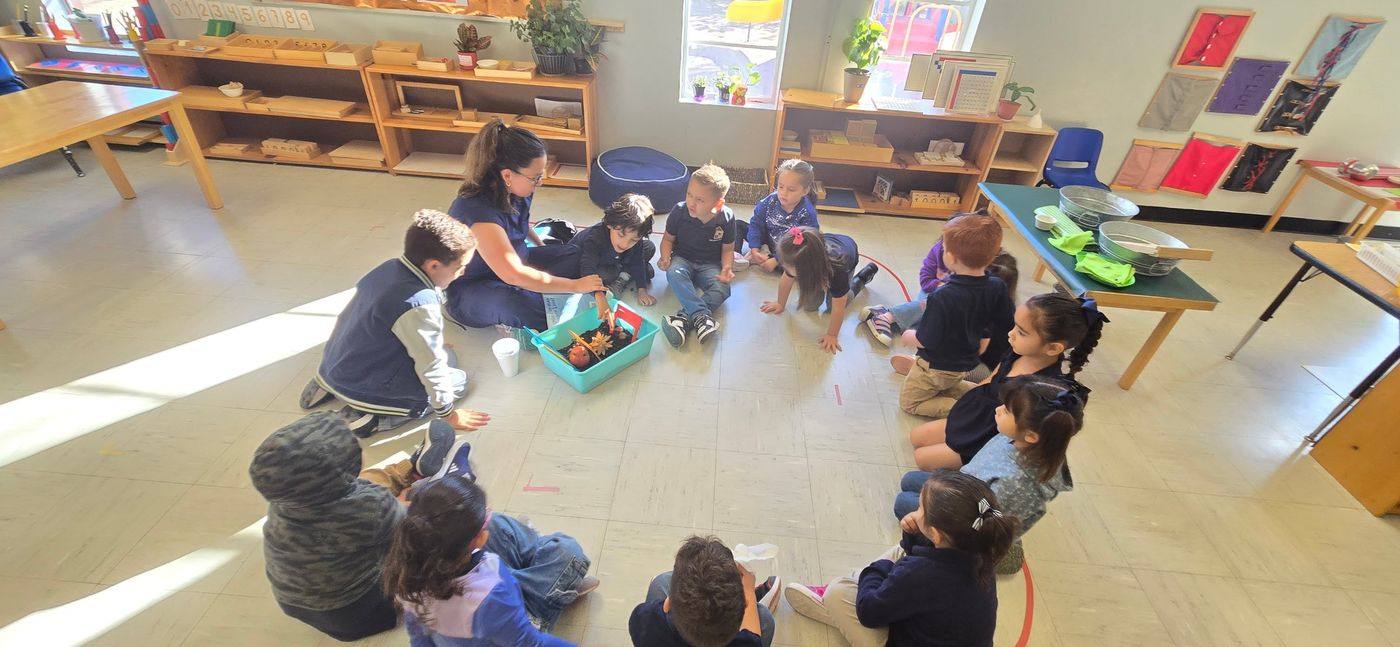
Our teachers are guides. They observe each child closely and give individual lessons the moment a child is ready, then step back.
Long, unhurried work periods let children settle in and go deep, instead of being moved along every few minutes.
Classrooms span about three years. Younger children learn by watching older ones, and older children grow in confidence by helping.
Montessori materials make abstract ideas concrete. Children hold a thousand in their hands long before they write it on paper.
Our classrooms are organized into areas. In each one, materials build on each other step by step, from simple to complex.
Pouring, preparing snack, dressing, and caring for the classroom. Real tasks build coordination, concentration, and independence.
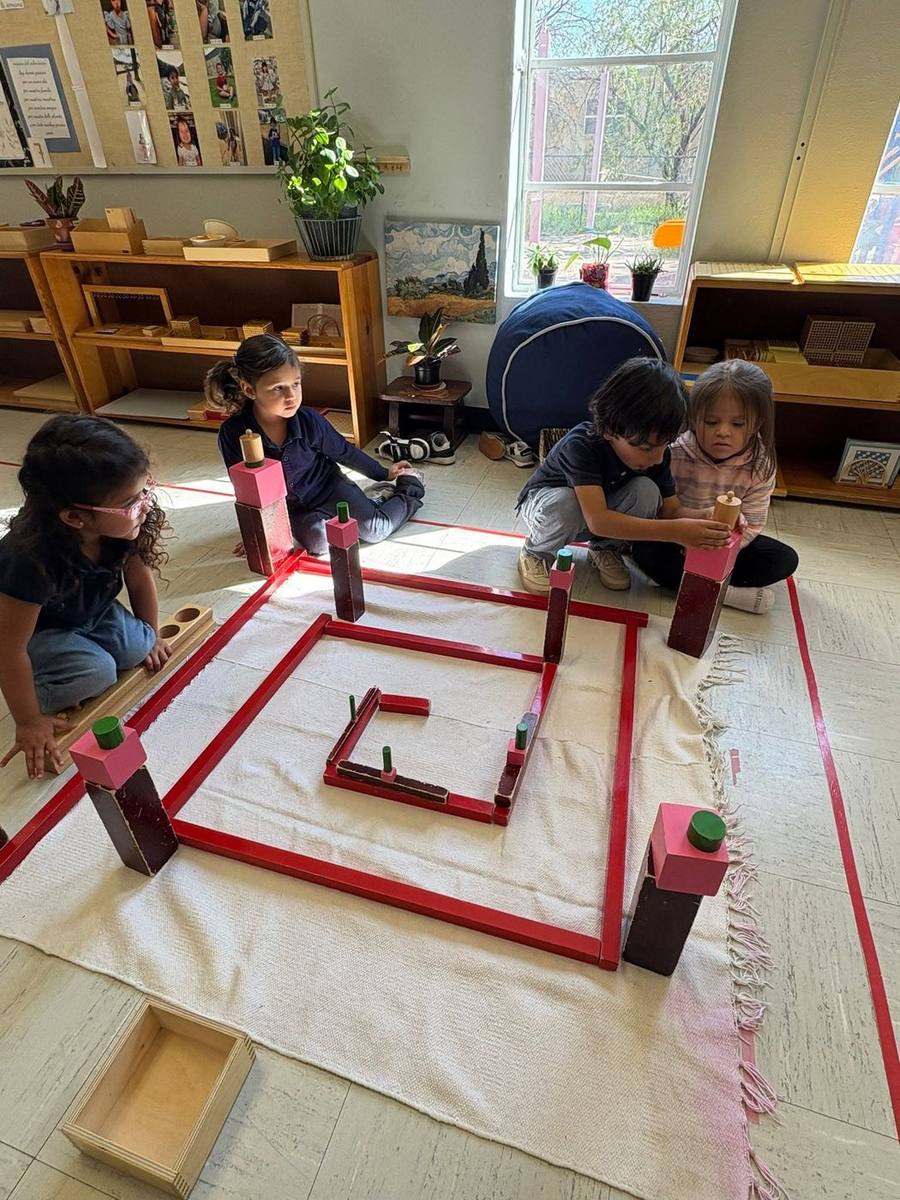
The Pink Tower, Red Rods, and color tablets refine the senses and lay the groundwork for math, through size, length, shape, and color.
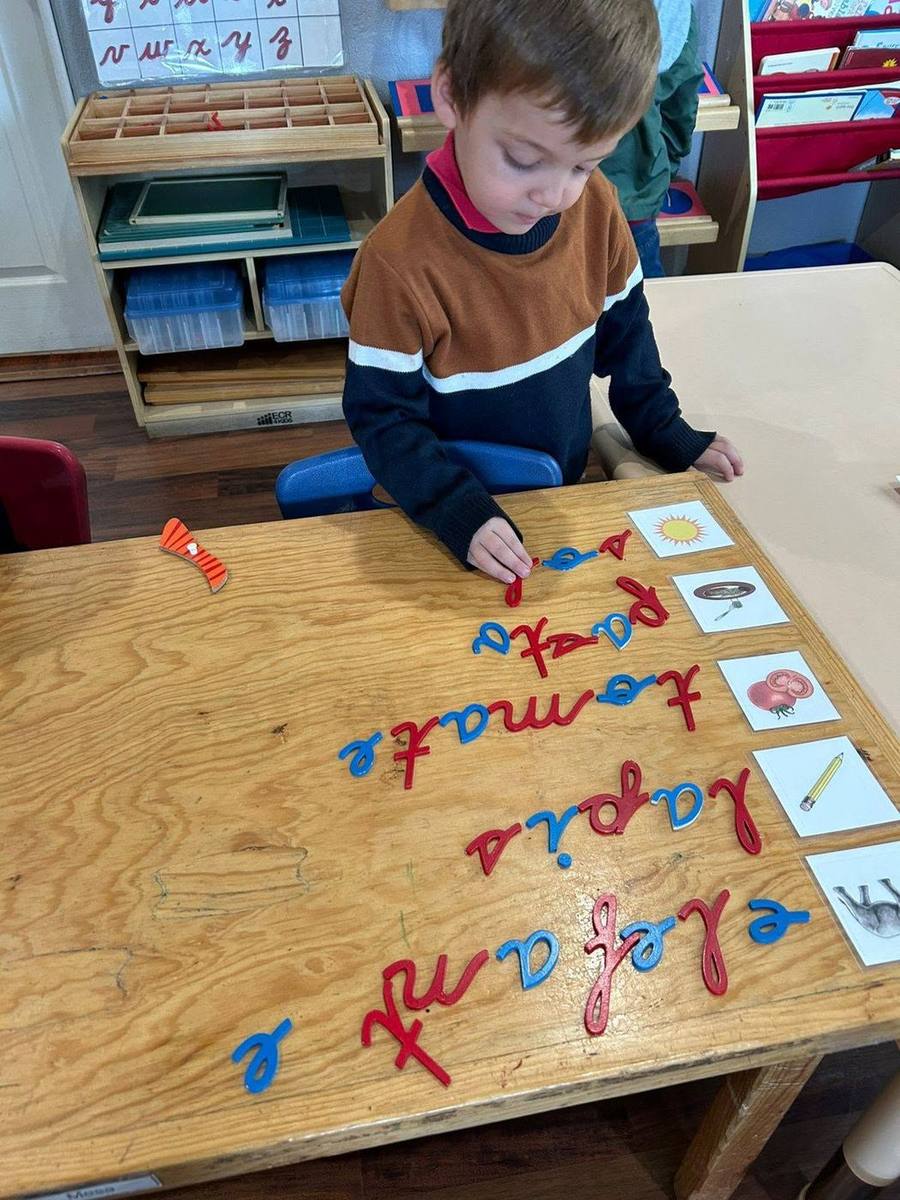
Spoken language, sandpaper letters, and the moveable alphabet lead naturally to writing and then reading, in Spanish.
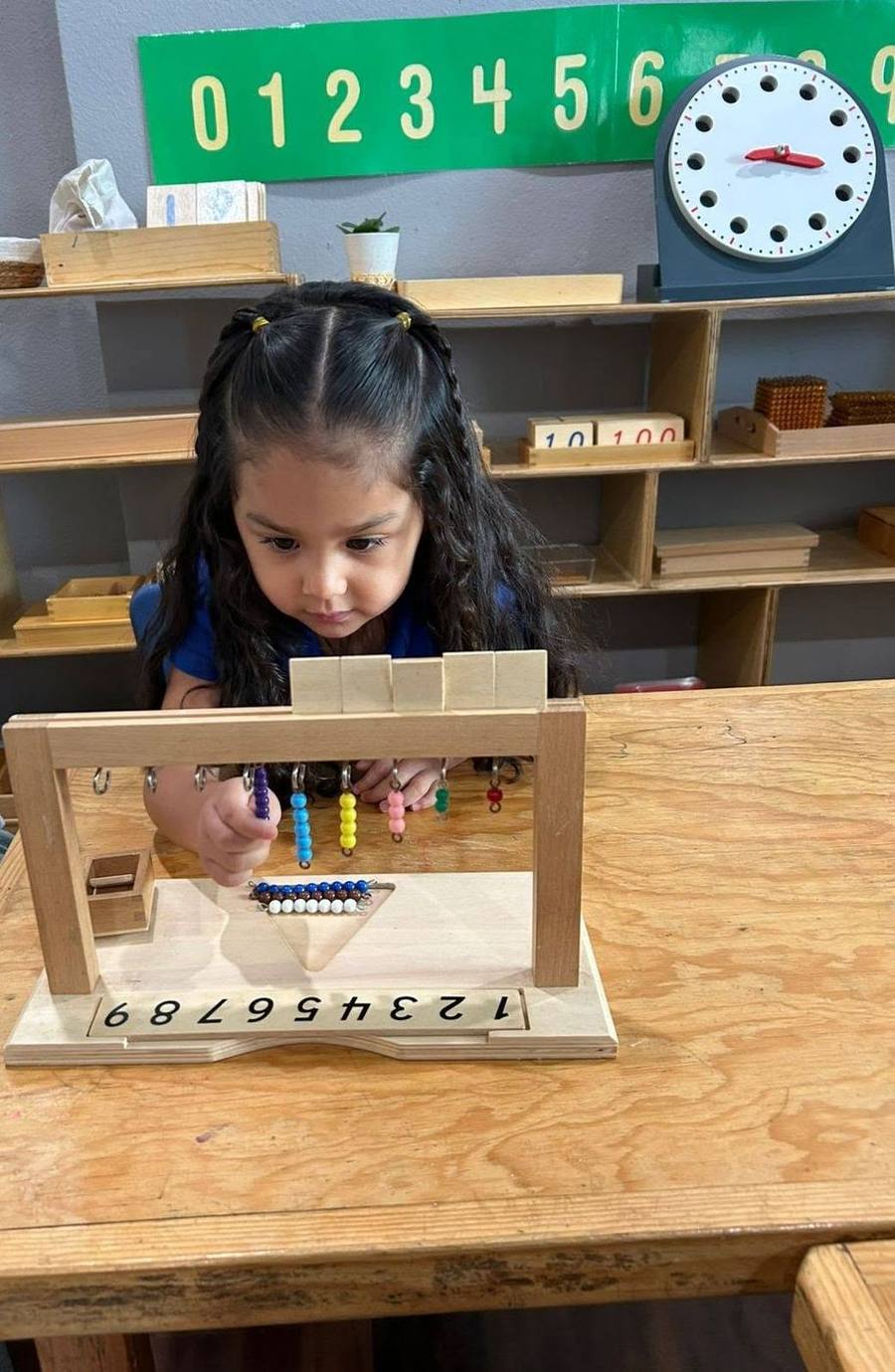
Bead stairs, number cards, and the golden beads let children see and touch quantity, from counting to the thousands and beyond.
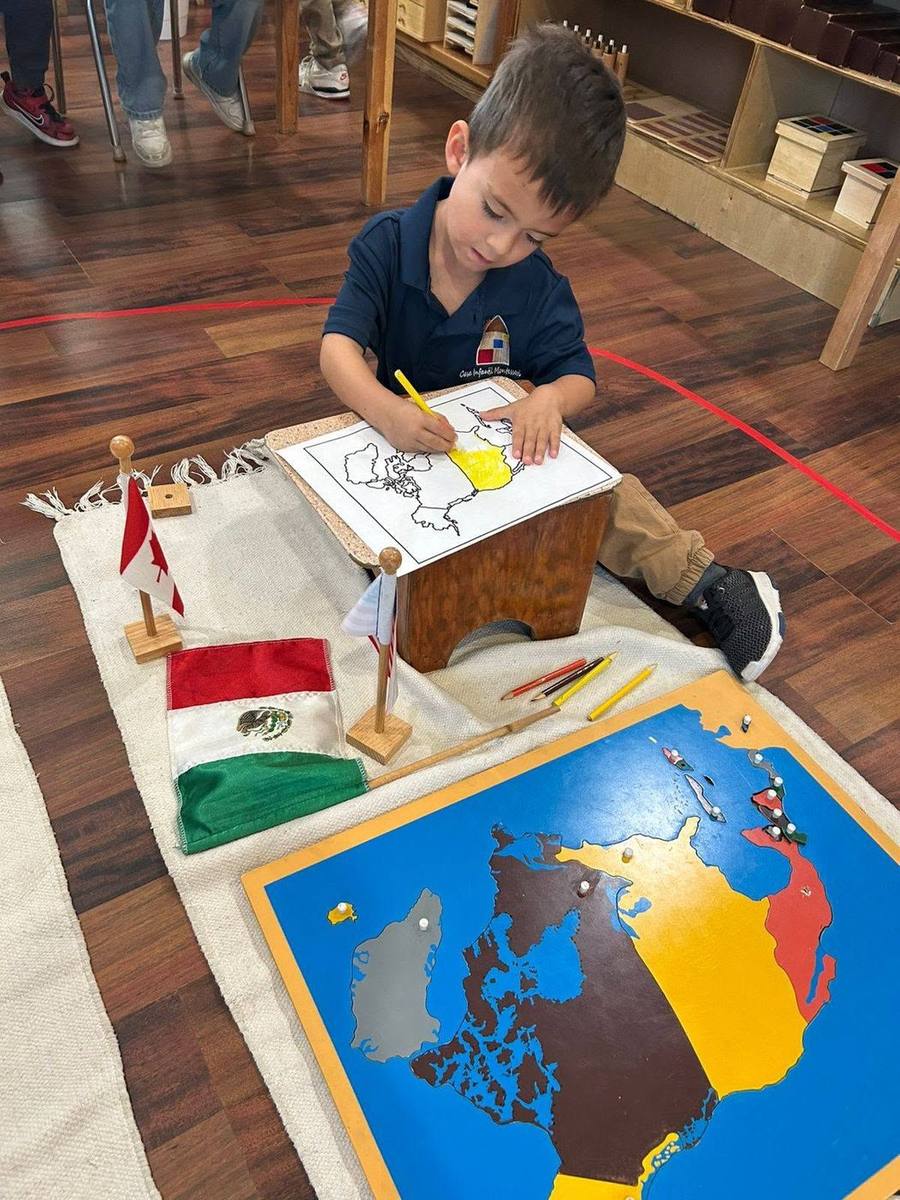
Puzzle maps, flags, plants, and animals open the world: geography, science, art, and music, and our place in it.
Every classroom has its own rhythm. Most mornings include:
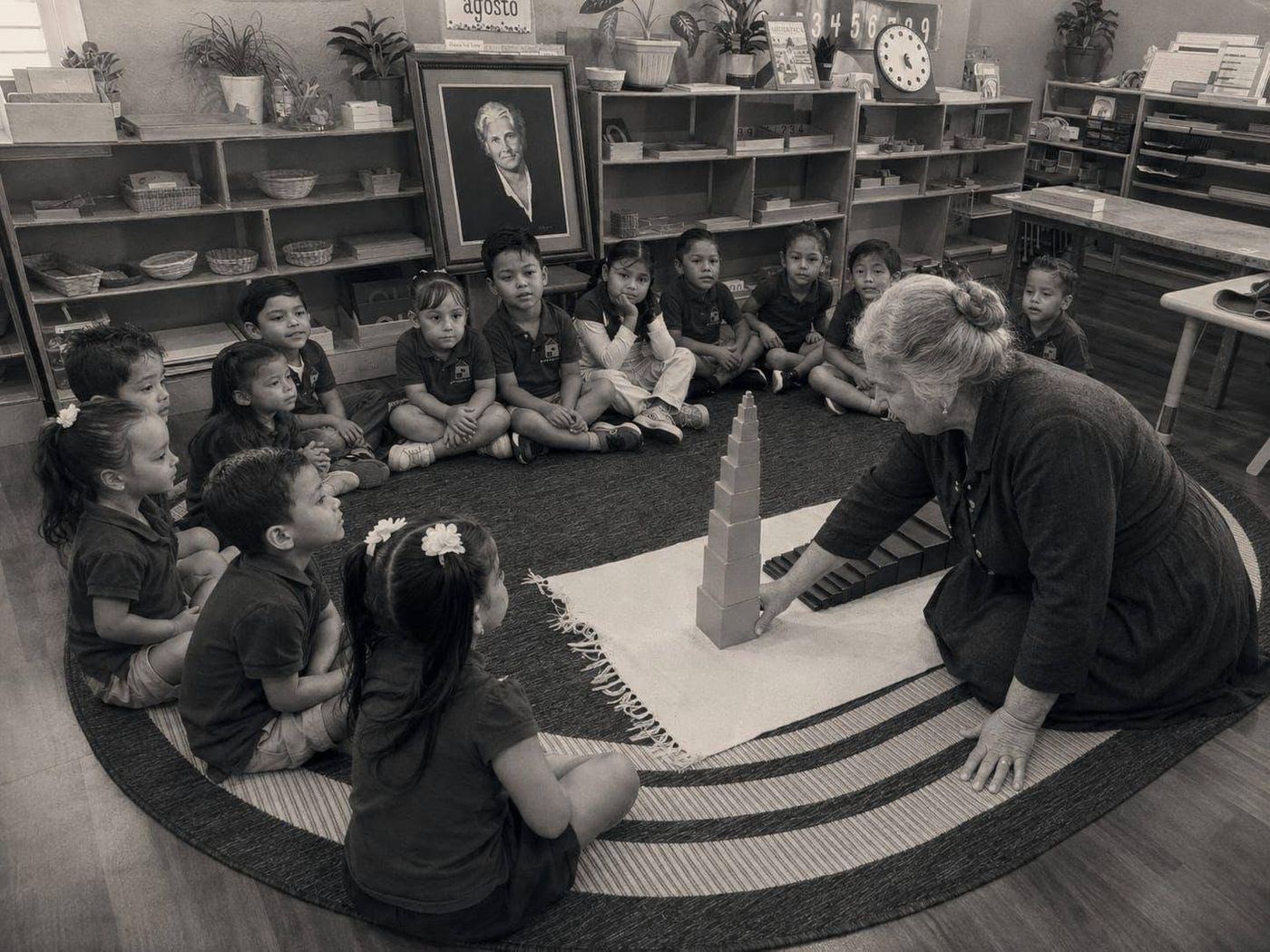
The best way to understand Montessori is to see it. Visit with your child and watch children choose, focus, and work with real purpose.
Leave your question and the best way to reach you. A member of our team will get back to you.